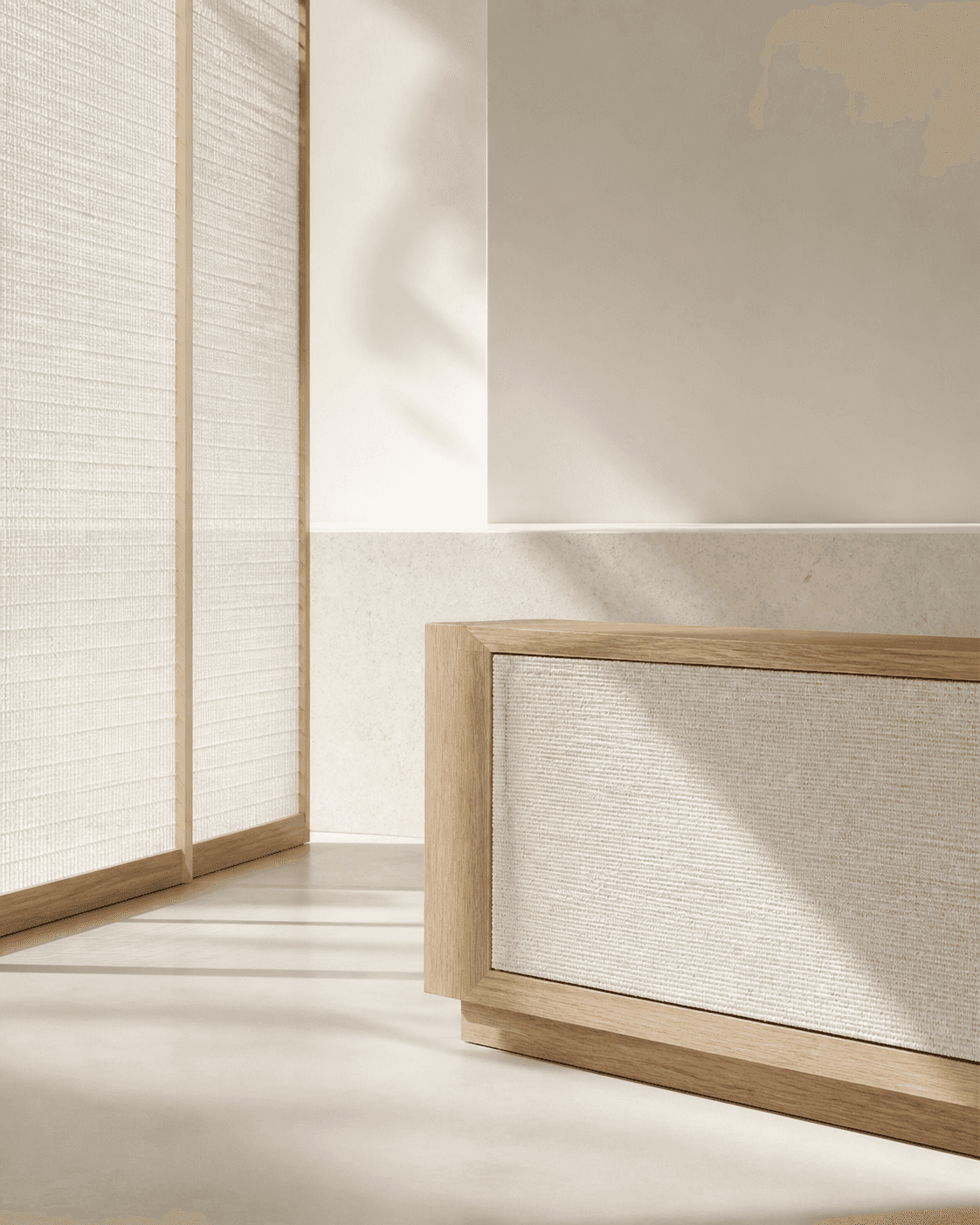
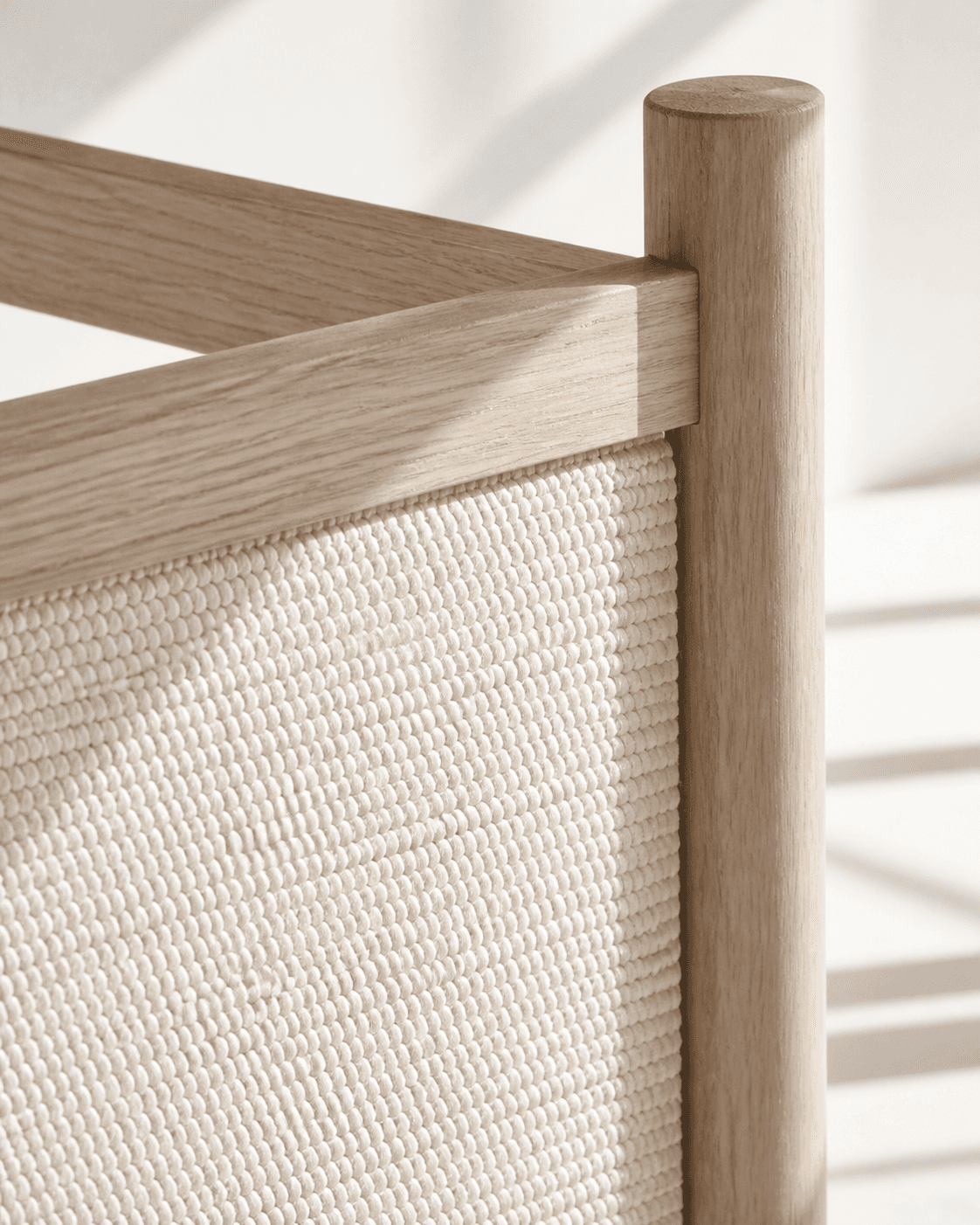
The first sketches for the Rift table contained no decorative line. There was an oak plane, two aluminium supports, and a small distance between them. That distance became the governing detail. It separated materials that age differently and gave the top a legible edge without reducing its substance.
Making a consistent gap across a long timber surface requires more than accurate machining. Oak responds to seasonal humidity; cast metal contains minute variations; floors are rarely perfect. The connection therefore combines fixed central registration with controlled lateral movement. Adjustable points in the bases compensate for the room, not for an imprecise object.
The gap also affects how the table is read. From standing height it is a fine dark line. From a seated position it reveals the thickness of the top and the inward shaping of its underside. The table seems lighter because structure and surface are not visually fused, yet the load path remains clear.
This principle appears throughout architecture, but furniture brings it within reach. Fingers find the softened lower edge. Light changes the interval over the course of a day. Dust reveals whether the detail can be maintained. A useful gap must be accessible enough to clean and protected enough not to collect every small object.
Precision is not the removal of evidence. The oak keeps its grain and the aluminium keeps a faint record of casting. The shadow simply gives each material room to remain itself.
FIELD NOTE / EXCERPT
The void is not decoration; it is the tolerance that lets two materials keep their own time.