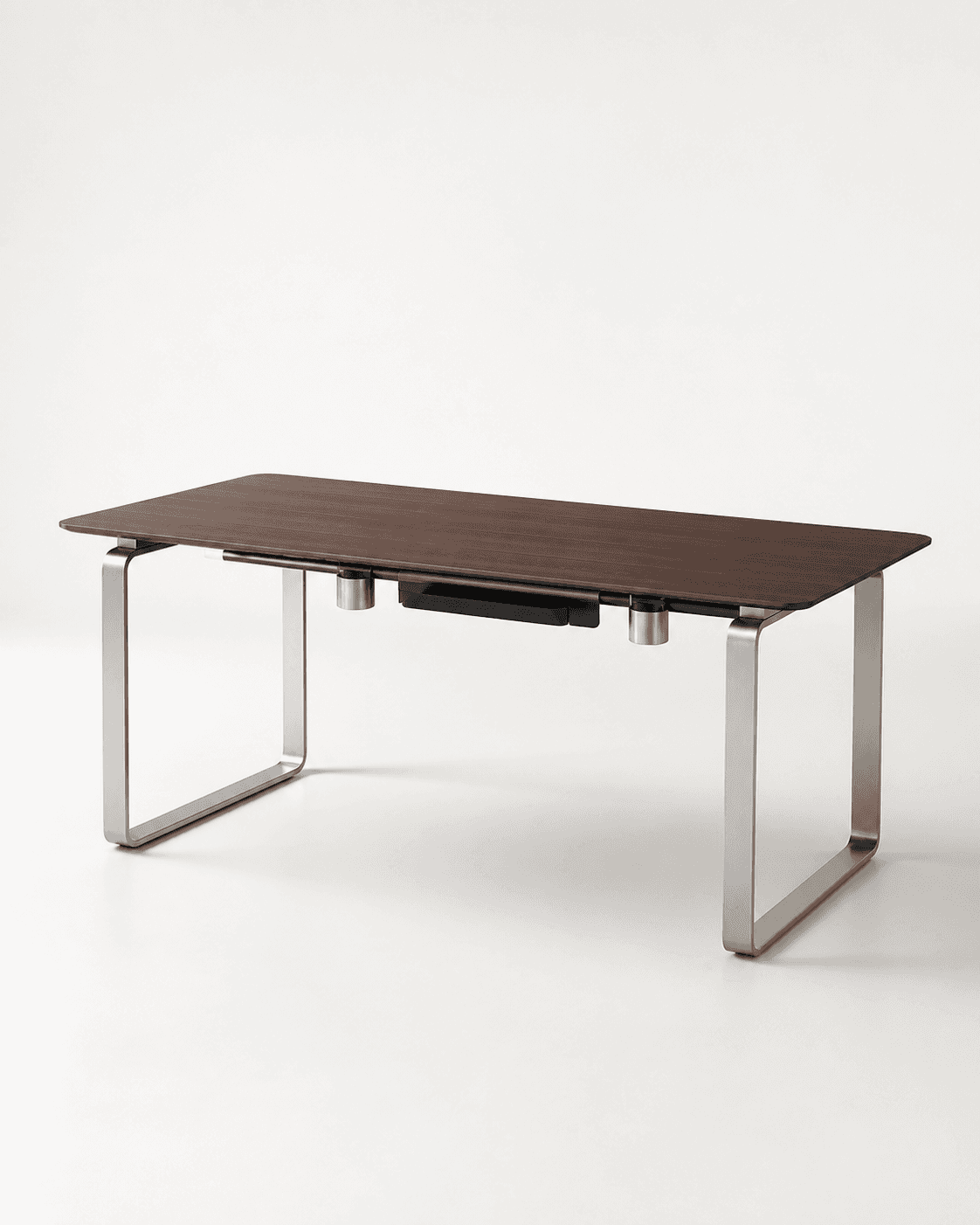
A quiet workroom is not necessarily silent. The important distinction is between sound that gives a room life and sound that repeatedly demands attention. Textile surfaces, book storage, and a substantial rug temper short reflections; a closed door and a considered threshold do more than an array of decorative acoustic objects.
The desk should define zones without dictating a single device. On Relay, a rear rail carries cables, paper, and small tools while leaving the main surface open. Accessories slide rather than lock into fixed positions because the arrangement of work changes during a day.
Light works best in layers. Daylight should arrive from the side of the dominant hand where possible, a broad ambient source should keep contrast manageable, and a task light should serve documents without producing glare on a screen. Reflective furniture can brighten the room, but polished metal belongs outside the direct sightline.
A chair supports movement before it supports a pose. Height, depth, and recline need to be adjusted quickly enough that a change of task leads to a change of posture. The mechanism should be readable, yet the chair should not overwhelm a residential room with levers and shells.
Finally, the workroom needs a closing ritual. A tray for active papers, a place for charging equipment, and one clear surface are often sufficient. Order is not a permanent image; it is a room that can be restored in five minutes.
FIELD NOTE / EXCERPT
A useful workroom is not empty. It makes the location of every necessary thing easy to remember.